
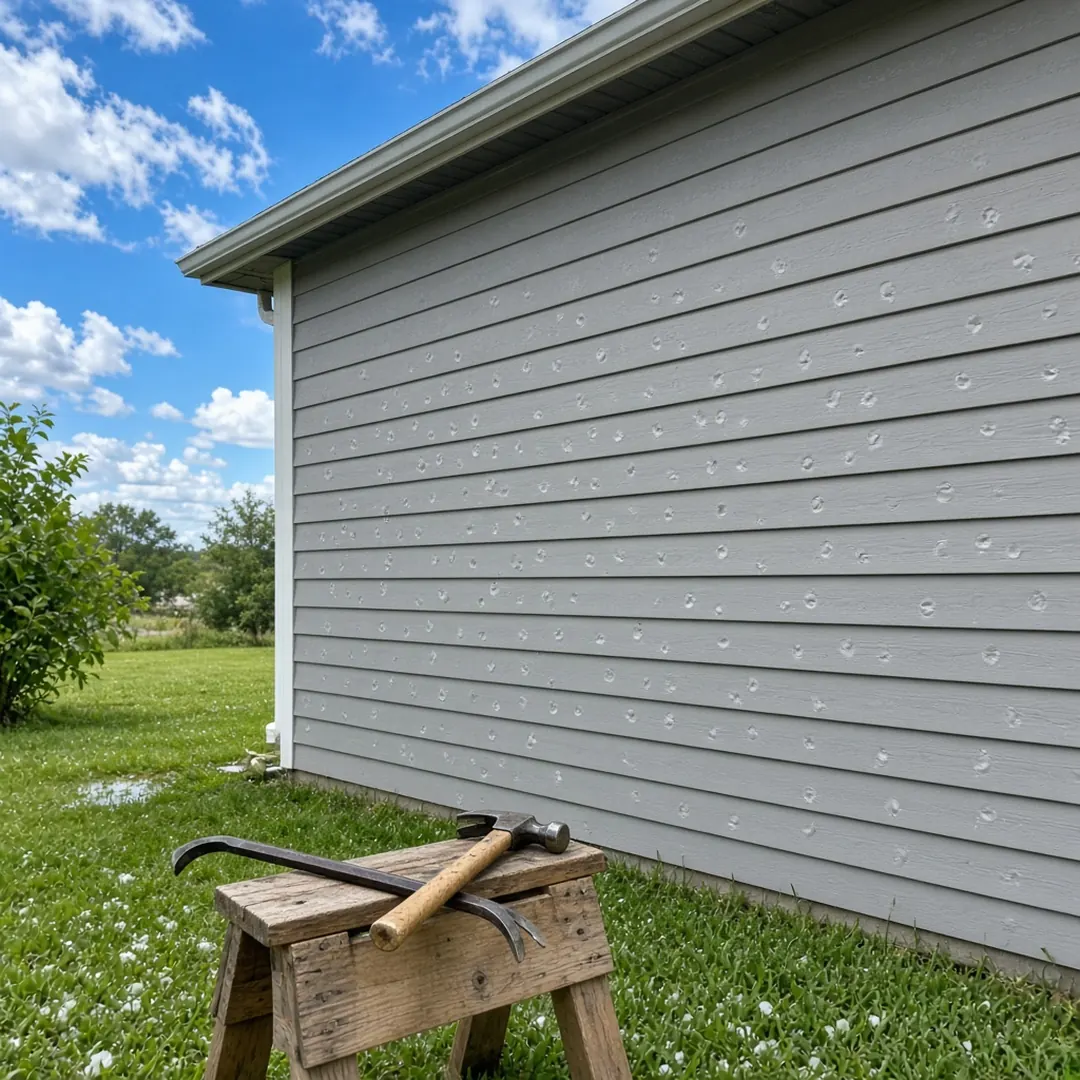
Storm and hail damage repair restores a home's cladding after severe weather — the hail that pounds North and Central Texas each spring, and the wind-driven rain, tropical storms, and flooding that reach the Gulf Coast. Because the roof takes the first visible hit, siding damage is often the part homeowners miss until an adjuster is already on site. This page explains what to check after a storm, how the claim side works, and how to vet a storm-damage contractor. Siding Pros TX lists storm-damage siding contractors across Texas by city.
What storm damage does to siding
- Hail bruises, cracks, and dents siding — worst on aging vinyl and hardboard — and the damage is not always obvious from the ground, especially on upper gables and dormers.
- High wind loosens, cracks, and tears off panels and drives rain into joints, flashing, and any opening.
- Wind-driven rain finds failed caulk and flashing and pushes water behind cladding that otherwise looks intact.
- Flooding (Gulf Coast) saturates siding and the sheathing behind it at the lower courses, leaving a flood line and hidden moisture that leads to rot.
The common thread is damage that hides: a wall can look finished from the street while water sits behind it, which is why a post-storm inspection matters.
What to check after a Texas storm
- Inspect the walls with the roof, not just the roof — hail and wind hit both.
- Look at upper gables, dormers, and the weather-facing elevations, where damage is hardest to see from the ground.
- Check the lower courses on homes that took high water, for a flood line and soft, saturated material.
- Document everything with photos of the full elevation, dated, before any temporary repairs.
- Address water intrusion quickly, drying and sealing the wall before trapped moisture turns into rot.
How storm-damage siding and insurance work in Texas
Many siding storm repairs are handled through a homeowner's insurance claim. A legitimate contractor will:
- Document the storm damage thoroughly and work with your adjuster.
- Expect you to pay your deductible as your policy requires.
Be wary of any contractor who offers to absorb or "waive" your deductible — that is illegal in Texas and a clear sign to look elsewhere. Also avoid out-of-town "storm chasers" who appear after a big event, do fast work, and are gone before any problem surfaces; a contractor with a verifiable local track record is the safer choice.
Region by region
- Dallas–Fort Worth and Austin (hail belts): spring hail is the main event; siding should be inspected alongside the roof after every significant storm.
- Houston and the Gulf Coast: wind-driven rain, tropical systems, and flooding drive the damage, with saturated lower courses and hidden moisture the key concerns.
- Statewide: on expansive clay, storms and drought cycles also move foundations — a stair-step crack that appears after a storm may be the ground, not impact, and should be judged before it is sealed.
What to look for in a storm-damage contractor
Texas has no state siding license, so confirm the following yourself:
- General liability insurance, verified directly with the insurer.
- A verifiable local track record — not a storm-chaser passing through.
- Thorough documentation of damage for your claim, with full-elevation photos.
- Willingness to work with your adjuster while you pay your deductible as your policy requires.
- No offers to absorb or waive your deductible — illegal in Texas, and a reason to walk away.
Find a storm-damage contractor near you
Browse your Texas city on Siding Pros TX to see the storm-damage siding contractors who serve your area.
Call Us Now for Storm Damage Siding Repair in Texas
Siding hit by hail, wind, or flooding? Call Us Now and get connected with a storm-damage siding contractor serving your part of Texas.