
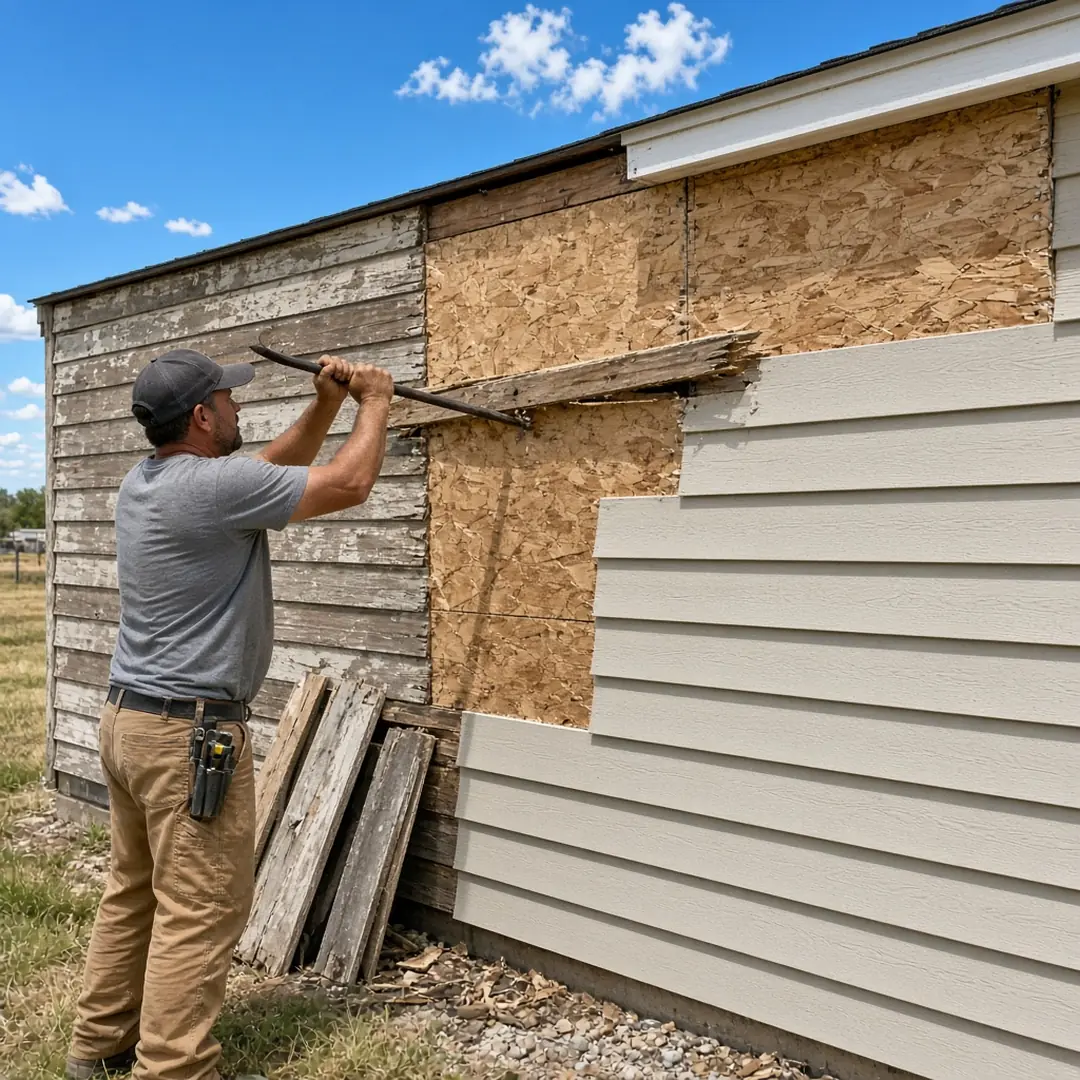
Siding replacement is the full removal of a home's old cladding and the installation of new siding in its place — a bigger job than a patch repair, and the right call once the existing material is failing across the house rather than in one spot. Across Texas the drivers differ by region: decades-old hardboard and vinyl aging out in the Dallas–Fort Worth suburbs, wood rotting in Houston's humidity, and storm-worn walls statewide. This page explains when replacement makes sense and what a good one looks like. Siding Pros TX lists replacement contractors across Texas by city.
When replacement beats repair
Repair keeps a sound wall weather-tight; replacement is for a wall that has reached the end of its service life. Signs it is time to replace rather than patch:
- Failure across multiple walls, not one damaged section — widespread cracking, swelling, or rot.
- Original cladding at age — much of the metro suburbs built in the 1960s–1990s still wear original hardboard or vinyl that is 30 to 60 years old.
- Rot you can press a thumb into, soft spots around windows, or moisture staining behind the panels.
- Repeated repairs that no longer hold, where patching is throwing money at a wall that needs retiring.
- Hidden sheathing damage found during an inspection or a storm claim.
A trustworthy contractor will tell you honestly which situation you are in rather than pushing a full re-clad on a wall that only needs repair.
What a replacement involves
- Tear-off: removing the old cladding down to the sheathing.
- Inspection: checking the exposed sheathing and framing for rot, moisture, and pest damage — the step that makes replacement worth more than a cosmetic recover.
- Correcting the substrate: replacing damaged sheathing and updating or adding flashing and the water-resistive barrier.
- New cladding: installing the chosen material to spec, with correct fastening and clearances.
- Trim and finish: corners, soffits, fascia, sealant, and paint or factory finish.
The value of a true replacement over a recover is that it opens the wall, so problems that were hidden get fixed instead of buried behind new panels.
Choosing a longer-lasting material
Since replacement is a once-in-decades decision, most Texas homeowners trade up to something that outlasts what failed:
- Fiber cement — the leading replacement statewide: rot-proof, hail-resistant, and long-lived in both North Texas heat and Gulf humidity.
- Engineered wood — a stable, rot-resistant wood look that commonly replaces failed hardboard while keeping a natural appearance.
- Vinyl — still chosen where budget leads, though it is the material most frequently being replaced in the first place.
Matching the new material to the home's exposure — hail belt, humid coast, or sun-beaten Hill Country lot — is the difference between a 15-year and a 40-year answer.
Region by region in Texas
- Dallas–Fort Worth suburbs: aging 1960s–1990s hardboard and vinyl at replacement age, plus hail-driven re-clads.
- Houston and the Gulf Coast: rot-driven replacement of wood and hardboard, with fiber cement the common upgrade.
- Austin and the Hill Country: sun- and storm-weathered wood and cedar accents, frequently re-clad in fiber cement or engineered wood.
What to look for in a replacement contractor
Texas has no state siding license, so confirm the following yourself:
- General liability insurance, verified directly with the insurer.
- Tear-off and re-clad experience, since removing failed cladding and correcting the wall is a specific skill.
- A written whole-wall scope covering sheathing, barrier, and flashing, with hidden damage priced as found.
- Honest repair-versus-replace guidance, not an automatic push to a full re-clad.
- No offers to absorb your insurance deductible — that is illegal in Texas.
Find a replacement contractor near you
Browse your Texas city on Siding Pros TX to see the siding contractors who serve your area.
Call Us Now for Siding Replacement in Texas
Is your siding failing across the house? Call Us Now and get connected with a replacement contractor serving your part of Texas.